
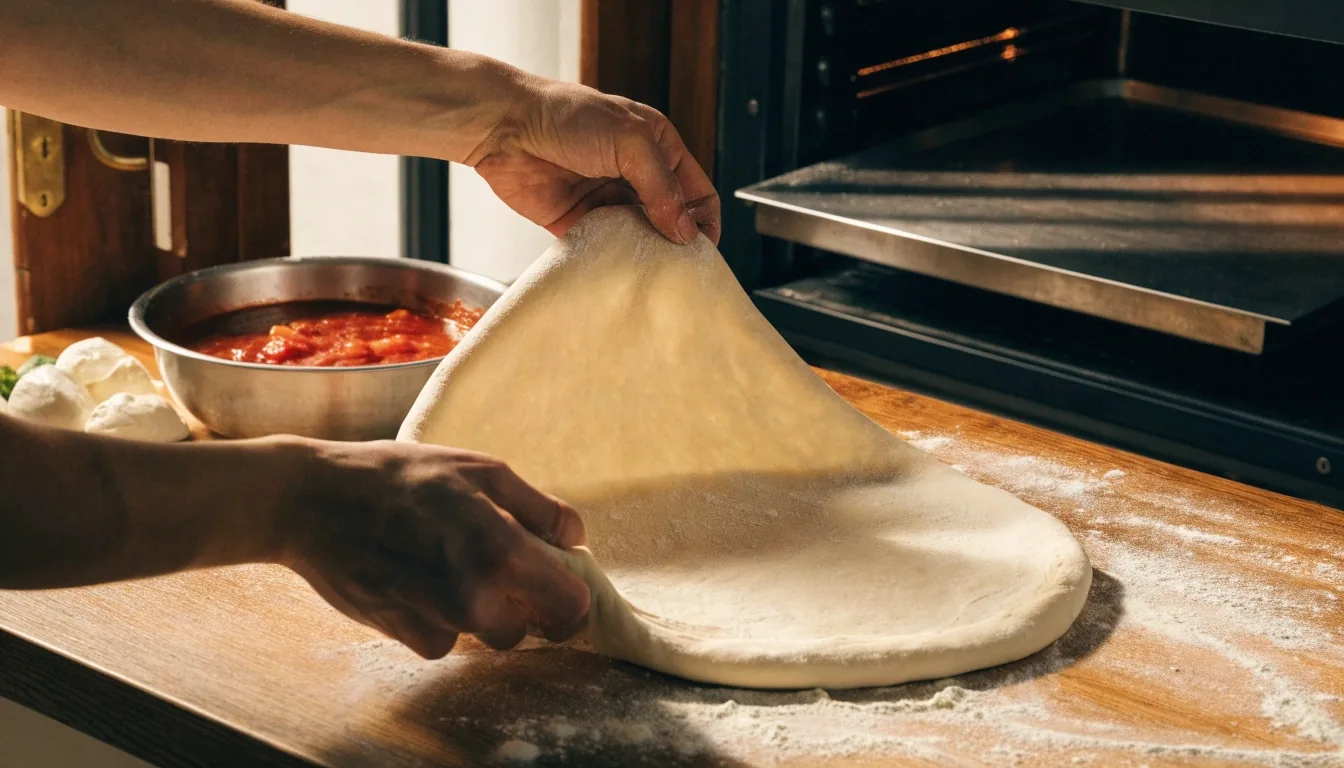
Pizza recipes and masterclasses for home ovens
Most home pizza fails for one of two reasons: the dough was rushed, or the oven was never hot enough. We publish original recipes for Neapolitan, New York-style, pan, and sourdough pizza, and we teach hands-on classes at 482 Mulberry Street in New York.
What you'll find here
Four pizza styles, each with its own dough formula and bake method. Every recipe lists hydration, fermentation time, and oven setup in plain numbers, so you can repeat a bake instead of guessing.
Start with the style that matches your oven, not the one that looks best in a photo.
Compare pizza styles- Neapolitan
- High heat and a fast rise. The dough stays soft, the edge blisters, and the bake is short enough that the center never dries out. It punishes a slow oven, so it only makes sense if your setup can genuinely reach high temperatures.
- New York-style
- A cold ferment in the fridge, then a very hot surface underneath. Thin, crisp, and still foldable — the style most home bakers try first, and the one most people rush.
- Pan pizza
- Forgiving and crisp-edged. It bakes in an ordinary home oven without special equipment, which makes it the safest place to start if you are still learning how your oven behaves.
- Sourdough
- Longer fermentation builds flavor you can't fake with commercial yeast, but it also makes the dough softer and harder to stretch without tearing. Patience, then technique.
A recipe gets you one pizza. Understanding dough gets you every pizza after that.
That's why our technique guides explain baker's percentage, the windowpane test, stretch and fold, and oven spring instead of only handing you a list of ingredients. Once you know why a dough is wet or slack, you can adjust it on the spot.
Read the techniques guide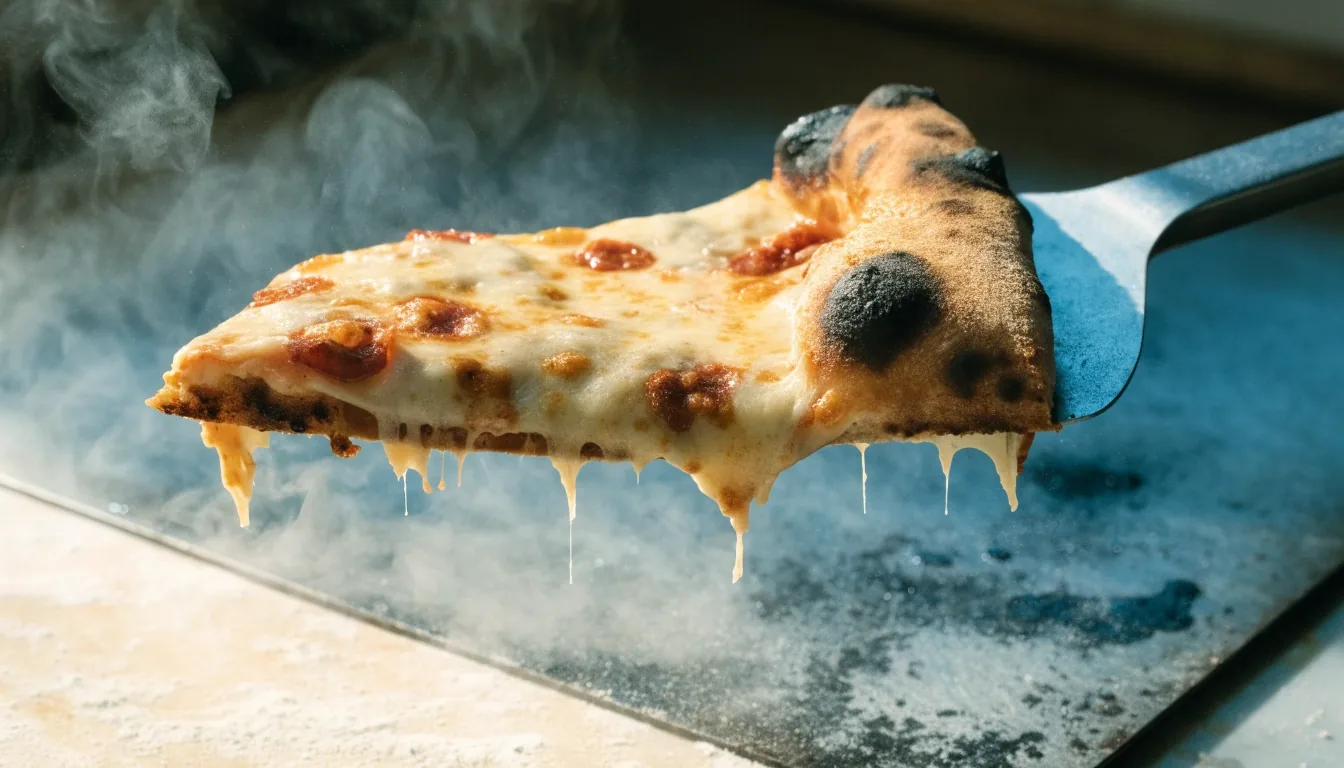
New York-style: the foldable slice
This is the style most home bakers in the U.S. try first, and the one most people get wrong. The target is thin, crispy, and still foldable, which means the dough needs a cold rest in the fridge and a very hot surface underneath it.
King Arthur Baking describes New York-style dough exactly this way — thin, crispy, yet foldable — and links the result to a baking steel and a hot oven. We build our recipe around that logic: cold ferment for flavor, steel for bottom browning, and a short, hot bake so the crust sets before the center goes soggy.
Cold ferment
One to three days in the fridge. The dough firms up, develops flavor, and browns more evenly than a same-day mix.
Steel underneath
A baking steel moves heat into the base fast. Pale, floppy undersides usually mean the surface was never hot enough.
Short, hot bake
The crust has to set before moisture from the sauce and cheese soaks down into the middle of the slice.
Why a baking steel matters
A baking steel sits in your oven and transfers heat to the bottom of the pizza far faster than most home equipment. It's more conductive than a stone, which is why it's central to serious home setups.
If your pizzas come out pale and floppy on the underside, the steel is usually the missing piece. You preheat it long, slide the pizza on, and the bottom catches up to the top. Preheat times and rack position are on the techniques page; the recipe pages tell you which styles benefit most.
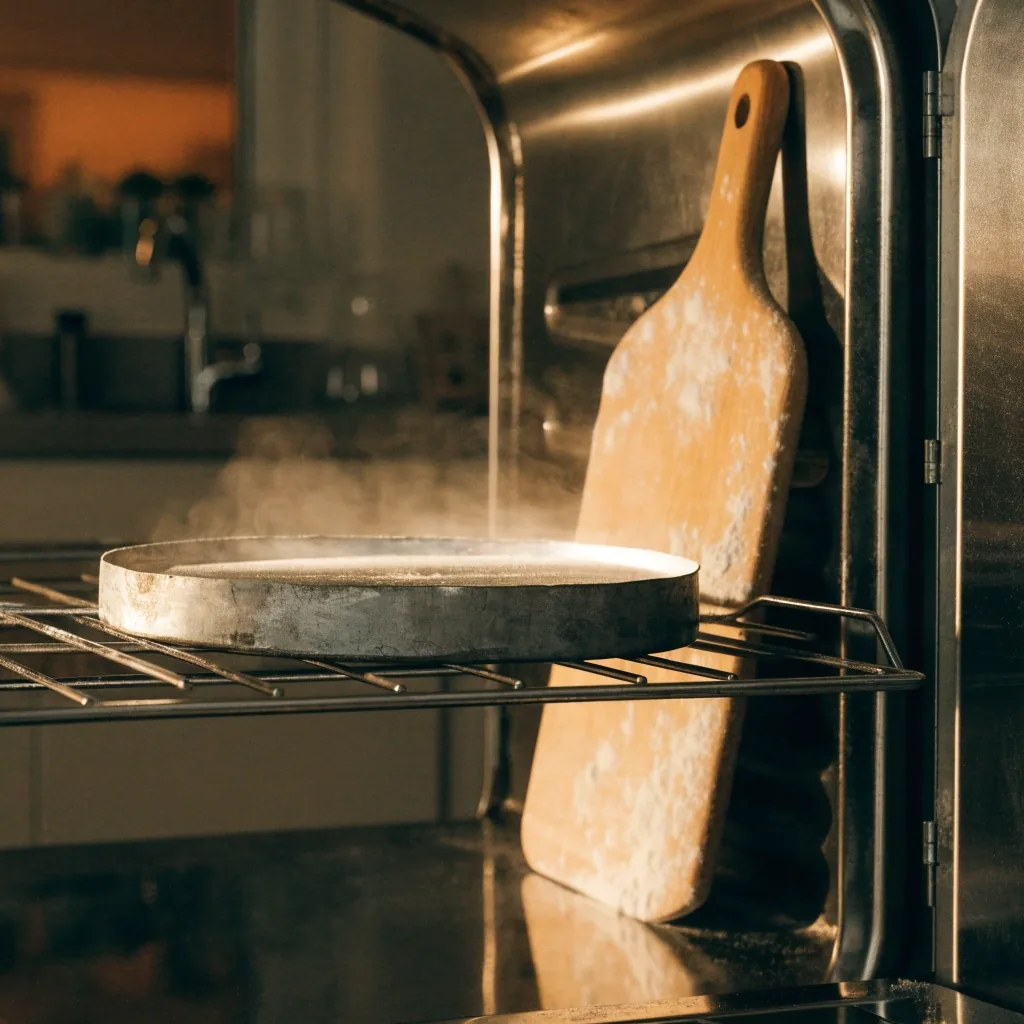
Steel holds and releases heat quickly, so the base browns while the top is still setting.
Sourdough, pan, and Neapolitan
Sourdough changes both the flavor and the handling of your dough. Longer fermentation builds complexity, but it also makes the dough softer and harder to stretch without tearing. Pan pizza is the opposite: thick, home-oven friendly, and very hard to ruin.
Neapolitan is the demanding one. It wants the highest heat you can reach and a fast bake, and it punishes a slow oven. MasterClass publishes a sourdough pizza crust recipe, and King Arthur Baking's 2026 course runs from pan to Neapolitan in one program — which tells you these styles belong in the same conversation even though they bake nothing alike.
What sourdough asks for
A live starter, a longer schedule, and gentler handling. The reward is a crust with depth you can't get from a fast commercial-yeast rise.
What pan pizza forgives
Uneven ovens, beginner stretching, and thick toppings. The oiled pan does most of the work on the bottom crust, so the edges crisp anyway.
What Neapolitan demands
Maximum heat and a bake measured in seconds, not minutes. If your oven tops out lower, the same dough will read as chewy instead of blistered.
Masterclasses at Mulberry Street
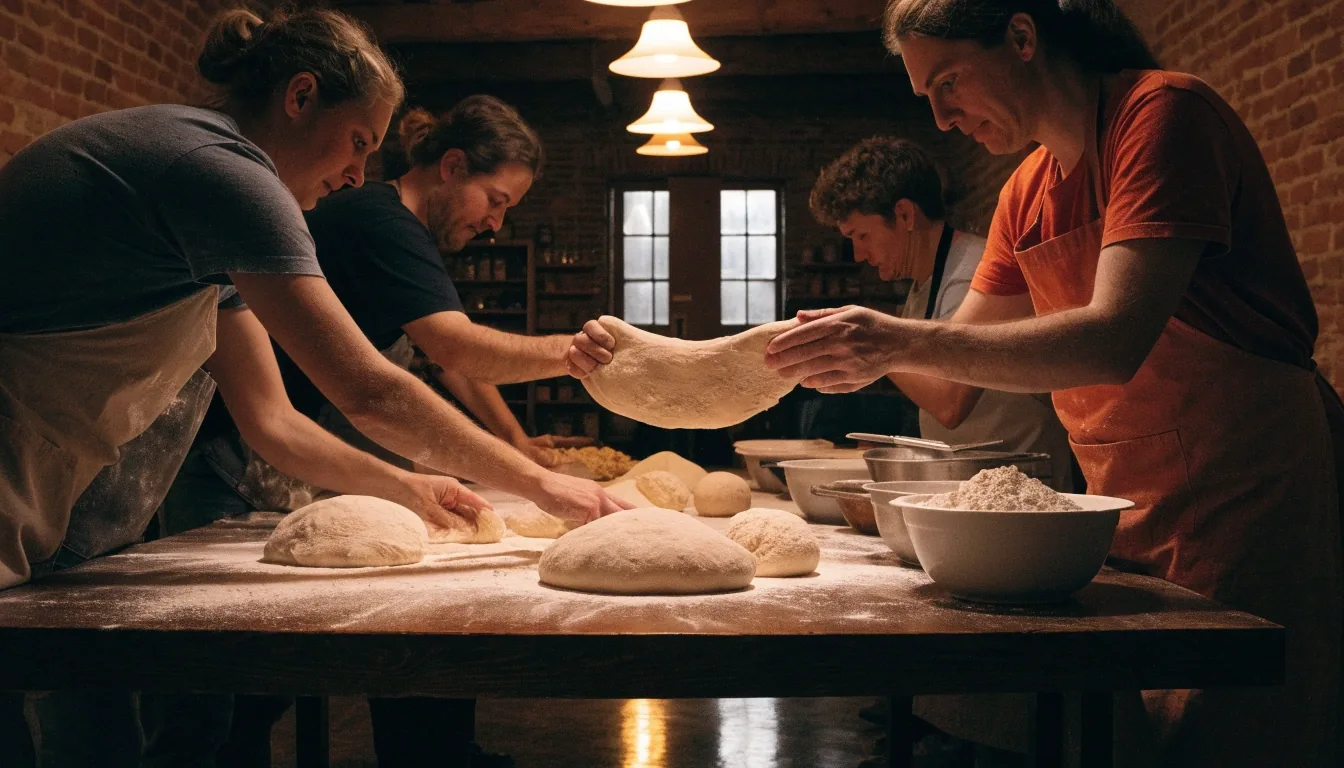
Our classes are hands-on. You mix, you stretch, you bake, and you eat what you made. We cover dough hydration, cold ferment, gluten development, and oven setup, then repeat the bake until the process feels automatic.
The format is small-group and built for home cooks, not restaurant kitchens, though the technique is the same one professionals use. Tara Jensen's Pizza Practice: Doughs, Techniques + Toppings, listed in 2026 with 89 recipes, is the kind of technique-first reference we keep on the shelf. We teach in that spirit: fewer tricks, more repetition.
Mixing and hydration
Feel what a 62% dough handles like against a wetter one, and learn to adjust without a scale panic.
Stretch and shape
Open a dough ball without tearing the rim, and keep the edge from crushing under your fingertips.
Oven setup
Rack position, preheat time, and how to read your own oven instead of trusting the dial.
Repeat the bake
You bake more than once in a session, because the second attempt is where the process usually clicks.
Which style fits your kitchen
Not every oven can do Neapolitan, and that's fine. Match the style to the equipment you already have, then bake.
| Style | Oven you need | Equipment that helps | Difficulty |
|---|---|---|---|
| New York-style | Standard home oven, run as hot as it goes | Baking steel, peel, fridge space for a cold ferment | Moderate — timing and stretch matter |
| Pan pizza | Standard home oven | Cast-iron skillet or a straight-sided pan | Easiest — forgiving of uneven heat |
| Sourdough | Standard home oven with a long schedule | A live starter, steel or stone, patience | Moderate to hard — dough gets slack |
| Neapolitan | A dedicated high-heat pizza oven | Pizza oven, turning peel, "00" flour | Hard in a home oven — needs real heat |
Recipe help and questions
Stuck on a dough that won't stretch, or a center that keeps going soggy? Ask us. We answer recipe questions by email and in person at the studio.
Common fixes are usually about hydration, fermentation time, or oven temperature, and we'll tell you which one is likely your problem. No question is too basic if it gets you to a better bake.
Contact ACF Pizza CraftWhat flour works best for a chewy, airy pizza dough?
It depends on the style. New York-style and pan pizza usually want a bread flour with higher protein for gluten development. Neapolitan is often made with a finer "00" flour. Sourdough works with either, but the fermentation time changes. Our recipes list the flour type for each style.
How do I get a blistered crust in a regular home oven?
Preheat a baking steel or stone thoroughly, use the highest rack position that still gives good bottom browning, and keep the bake short. A cold ferment helps the crust develop color. Full preheat times are on the techniques page.
What is the difference between Neapolitan, New York-style, and pan pizza?
Neapolitan is fast-baked at very high heat with a soft, blistered edge. New York-style is thin, crispy, and foldable, usually baked on a steel. Pan pizza is thicker with crisp edges and bakes in a home oven more forgivingly. Our styles guide compares all four, including sourdough.
Do I need a pizza stone, baking steel, or pizza oven?
A baking steel is the most effective upgrade for a standard home oven because it's more conductive than a stone. A dedicated pizza oven is only necessary if you want true Neapolitan heat. Pan pizza needs neither.
How long should pizza dough ferment for the best flavor?
A cold ferment of one to three days in the fridge builds noticeably more flavor than a same-day dough. Sourdough takes longer still. Exact times are in each recipe, since hydration and yeast amount change the schedule.
How do I avoid a soggy center when I add toppings?
Use less sauce than you think, drain wet toppings like fresh mozzarella, and make sure your baking surface is fully preheated. A short, hot bake also helps the crust set before moisture soaks in.
Pick a style, then bake it this week
Read the recipe for the style that matches your oven, or come to Mulberry Street and work through the whole process with your hands in the dough. Either way, you leave with something you can repeat at home.
Studio hours are Monday to Friday, 9:00 AM to 6:00 PM, and Saturday, 10:00 AM to 4:00 PM. Recipe questions are welcome by email at [email protected] or by phone at +1-212-555-0194.
ACF Pizza Craft, 482 Mulberry Street, New York, NY 10013 — recipe questions answered by email and in person at the studio.